
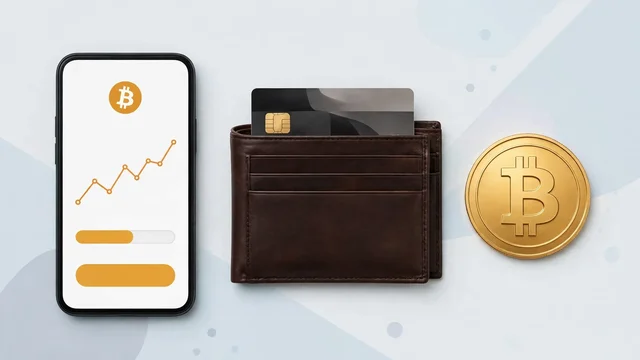
How to buy Bitcoin is a question with a short answer and a longer one. The short answer: open an account on a regulated exchange, verify your identity, add a payment method, and place a buy order. You can own your first fraction of a bitcoin within an hour, starting with as little as a few dollars.
The longer answer is that the details matter. The exchange you choose decides your fees, your security and your legal protection. The payment method you pick can change your cost by several percent. And what you do after you buy — where you store your coins — matters more than the purchase itself.
This guide walks through how to buy Bitcoin safely, step by step, with real fee figures from the exchanges’ own published schedules as of November 2026. It covers the main routes — exchanges, apps, ATMs and alternatives — and the mistakes beginners most often make.
Before the steps, four facts that shape every decision in this guide. You buy fractions: one bitcoin traded around $55,800–$58,810 on the morning of 21 November 2026, but Bitcoin is divisible into 100 million satoshis, and exchanges let you buy any dollar amount — $10 buys roughly 0.00017 BTC. Bitcoin is volatile: the price fell below $60,000 in November 2026 for the first time in about two years, after trading above $120,000 earlier in the year. Only buy with money you can afford to lose. Bitcoin is not anonymous: every transaction is recorded permanently on a public blockchain, and regulated exchanges must verify your identity. Supply is capped: only 21 million bitcoin will ever exist, and about 20.1 million — 95.7% — are already in circulation.
What you need before you start: a government-issued photo ID (passport or driving licence), a phone number and email address you control, a bank account or debit card, and an authenticator app for two-factor authentication. Set aside 20–30 minutes for the first setup; every purchase after that takes under a minute.
In this article
- Key Takeaways
- Step 1: Choose Where to Buy Bitcoin
- Step 2: Create an Account and Verify Your Identity
- Step 3: Add a Payment Method
- Step 4: Place Your First Bitcoin Order
- Step 5: Store Your Bitcoin Safely
- Other Ways to Buy Bitcoin
- Common Mistakes Beginners Make
- Facts and Figures
- What to Watch Next
- Frequently Asked Questions
- Related Articles
Key Takeaways
- The standard route is a regulated exchange: sign up, complete KYC identity verification, add a payment method, buy, then move larger holdings to your own wallet.
- You do not need to buy a whole bitcoin — BTC is divisible to 8 decimal places, and most exchanges let you start with $2–$10.
- Bank transfers are the cheapest way to fund a purchase; card buys are faster but typically add 2–4% in fees.
- Use the exchange’s advanced trading interface (Coinbase Advanced, Kraken Pro): a $1,000 market buy costs about $9 on Coinbase Advanced and $8 on Kraken Pro, versus roughly $10–$19 plus a spread on the simple buy buttons.
- Binance has the lowest entry-tier spot fees at 0.10%; Coinbase Advanced (US) charges 0.50%/0.90% since September 2026.
- Never leave large amounts on an exchange long-term: the October 2026 Binance hack, the largest on record at about $6.3 billion, is the latest reminder.
Step 1: Choose Where to Buy Bitcoin
The best place to buy Bitcoin depends on what you value most: simplicity, fees, security, or the range of coins. For most beginners, a large regulated exchange is the right answer.
Coinbase is the easiest starting point for first-time buyers. Founded in 2012 and listed on the Nasdaq since April 2021, it is the largest US exchange, with a simple app and strong regulatory standing. The trade-off is cost: on Coinbase Advanced, the US entry tier is 0.50% maker and 0.90% taker since a fee restructure in September 2026, and the simple Buy button in the app costs about 1.875% plus a spread.
Kraken is the choice for buyers who care about fees and security. Founded in 2011, it is one of the oldest exchanges still running, with a long record of no major hacks and early adoption of proof-of-reserves audits. Kraken Pro charges 0.40% maker and 0.80% taker at its entry tier, stepping down as your 30-day volume or assets on the platform grow.
Binance is the largest exchange in the world by trading volume and the cheapest for active traders: 0.10% for both makers and takers, falling to 0.075% if you pay fees in BNB. But it comes with caveats. Binance paid a $4.3 billion US settlement, operates under restrictions in several countries (US users must use the separate Binance.US), and suffered a roughly $6.3 billion hack in October 2026 — the largest in crypto history, which Binance says it is covering.
Other options include Gemini (US-regulated, strong security, higher fees at 0.60%/1.20% on ActiveTrader), Crypto.com (mobile-first, 0.25%/0.50% on its exchange), and broker apps such as Robinhood, where buying is simple but you historically could not withdraw coins to your own wallet — check the current terms before assuming you can.
What should a beginner actually check before signing up? Four things: is the exchange regulated or registered in your country; does it publish proof of reserves; does it let you withdraw to your own wallet; and does it support your local currency? If any answer is no, keep looking. Our comparison guide, Best Crypto Exchange in 2026: Top Picks Compared, covers the full field in depth.
Step 2: Create an Account and Verify Your Identity
Once you have picked an exchange, the setup is straightforward — and nearly identical everywhere.
Create your account with an email address and a strong, unique password. Then enable two-factor authentication (2FA) before you deposit anything, using an authenticator app (Google Authenticator, Authy, or similar) rather than SMS. SMS codes can be intercepted through SIM-swapping; authenticator codes cannot.
Next comes KYC — Know Your Customer verification. Every regulated exchange is legally required to verify who you are before letting you buy with fiat money. You will need to upload a government photo ID and usually take a selfie or a short video. Some exchanges also ask for proof of address.
Approval usually takes minutes, though it can stretch to a day during busy periods or if your documents need manual review. Set your account up before you want to buy, not during a price move: verification delays are the most common reason beginners miss the price they wanted.
Two warnings. First, never share your account credentials, 2FA codes, or verification selfies with anyone claiming to be exchange support: real support will never ask for them. Second, expect the exchange to ask questions about your source of funds for larger deposits. That is normal anti-money-laundering procedure, not suspicion.
Step 3: Add a Payment Method
How you pay for your bitcoin affects both speed and cost, and the differences are large enough to matter.
Bank transfer is the cheapest option almost everywhere. In the US, ACH transfers are usually free but can take 1–5 business days to clear. In the UK, Faster Payments are typically free and near-instant on exchanges that support them. In the EU, SEPA transfers are usually free. The pattern is the same: bank transfers cost little or nothing, and the price is patience.
Debit card is the fastest option: buy instantly, coins in your account within seconds. The price is the fee — card purchases typically add 2–4% on top of the trading fee, and some banks treat crypto purchases as cash advances.
Credit card is the option to avoid if you can. Beyond the card fee, many issuers charge cash-advance fees and interest, and buying a volatile asset on borrowed money is a bad idea twice over. Several UK and US banks block crypto purchases on credit cards entirely.
PayPal, Apple Pay and similar are offered by some exchanges and brokers. They are convenient and fast, but fees are usually at the card end of the range, and limits can be lower.
The practical rule: link your bank account first, even if your first purchase is by card. Bank funding is what makes repeat buying cheap. And whatever method you use, check the fee preview before confirming — if the number surprises you, compare it with the advanced trading interface, where the same purchase is usually much cheaper.
Step 4: Place Your First Bitcoin Order
This is the step where beginners overpay without realising it, because every major exchange sells bitcoin at two different prices.
The simple Buy button — the big friendly button in the app — charges a flat fee plus a spread, a small mark-up built into the price you see. On Coinbase the simple trade fee is about 1.875% plus the spread; on Kraken’s app it is 1% plus the spread.
The advanced interface — Coinbase Advanced, Kraken Pro — charges a transparent maker-taker fee on an order book, with no spread. At entry tiers, a $1,000 market buy costs about $9.00 on Coinbase Advanced (US) and $8.00 on Kraken Pro, against roughly $10–$19 plus spread on the simple buttons. Both advanced interfaces are free to use. Use them.
There are two order types a beginner needs to know:
- Market order. Buy immediately at the best available price. Simple, instant, and the right choice for most first purchases. You pay the taker fee.
- Limit order. Set the price you are willing to pay, and the order fills only if the market reaches it. Cheaper — you pay the maker fee — but it might never fill.
For a first purchase, a market order for a modest amount is the sensible default. Enter the amount in your local currency, review the fee and the exact amount of BTC you will receive, and confirm. Your bitcoin appears in your exchange account immediately.
One strategy worth knowing from the start is dollar-cost averaging (DCA): buying a fixed amount on a regular schedule — weekly or monthly — regardless of price. It removes the stress of timing the market and smooths out volatility over time. Coinbase and Kraken both offer recurring buys, and Bitcoin-focused services such as Swan Bitcoin are built around DCA with automatic withdrawal to your own wallet.
Step 5: Store Your Bitcoin Safely
Buying bitcoin is the easy part. Keeping it is where most losses happen.
When you buy on an exchange, your coins sit in the exchange’s wallet. The exchange holds the private keys — the cryptographic secret that controls the coins. That is called custodial storage, and it means you are trusting the exchange with your money. History says that trust is sometimes misplaced: Mt. Gox collapsed in 2014 with about 850,000 BTC lost, FTX collapsed in 2022 with customer funds misused, and in October 2026 Binance lost about $6.3 billion in the largest hack on record (Binance says it is covering the loss, and an Abu Dhabi court has ordered 18 firms to keep stolen funds frozen, as our report on the Binance hack court freeze covers).
The alternative is self-custody: moving your bitcoin to a wallet where you hold the keys. The rule experienced holders live by is simple — not your keys, not your coins. There are three tiers:
- Software wallet (hot wallet). An app on your phone or computer, such as Electrum, BlueWallet or Sparrow. Free, convenient, and suitable for amounts you use regularly. The risk is malware: if your device is compromised, your coins are too.
- Hardware wallet (cold wallet). A small physical device, such as a Ledger or Trezor, that keeps your private keys offline. You connect it only to sign transactions. This is the standard recommendation for anything you plan to hold long-term, and it costs roughly $70–$150.
- Paper or metal backup. Your wallet’s seed phrase — 12 or 24 words that can restore your entire wallet — written on paper or stamped into metal and stored somewhere safe. The seed phrase is your bitcoin: anyone who has it can take your coins, and if you lose it with no backup, your coins are gone forever.
A sensible approach for beginners: keep small amounts on the exchange for convenience, and move anything you would be upset to lose to a hardware wallet. When you withdraw, send a small test amount first, confirm it arrives, then send the rest. Always double-check the destination address — Bitcoin transactions cannot be reversed. And never photograph your seed phrase, store it in a cloud document, or type it into a website. Our guide to choosing one, Best Crypto Wallet in 2026: Top Picks Compared, covers the options in detail.
Other Ways to Buy Bitcoin
Exchanges are the main route, but they are not the only one.
Bitcoin ATMs let you buy with cash. You find a machine, scan your wallet’s QR code, insert cash, and receive bitcoin. There were about 26,991 crypto ATMs worldwide as of 12 November 2026, according to Coin ATM Radar — down nearly a third from about 39,400 at the start of the year, as US states banned or capped machines and the largest operator, Bitcoin Depot, entered Chapter 11 in May 2026. Roughly 71% of the remaining machines are in the US. ATMs are convenient for cash buyers but charge high fees, typically several percent above the market rate.
Peer-to-peer (P2P) marketplaces such as Bisq, Hodl Hodl and Paxful connect buyers and sellers directly, with escrow holding the bitcoin until payment clears. P2P can offer more payment methods and, on some platforms, less identity verification — but it also carries more fraud risk. Only use platforms with escrow and a reputation system, and never agree to trade outside the platform’s protection.
Bitcoin ETFs are the simplest route for investors who want price exposure without holding bitcoin at all. US spot Bitcoin ETFs have traded since January 2024, and the largest, BlackRock’s IBIT, is one of the most successful ETF launches ever — though November 2026 saw heavy outflows, with $3.47 billion leaving Bitcoin ETFs in the month, as our report on Bitcoin ETF outflows covers. ETFs are convenient and sit inside ordinary brokerage and retirement accounts, but you do not own bitcoin and you pay an annual management fee.
Payment and broker apps — PayPal, Cash App, Revolut, Robinhood — let you buy bitcoin inside an app you already use. Convenience is the attraction; the catch is often that you cannot withdraw to your own wallet, or that fees and spreads are high. Check the withdrawal terms before buying, not after.
Common Mistakes Beginners Make
Most first-time buyer losses are not market losses. They are avoidable mistakes.
Leaving everything on the exchange. Exchanges get hacked, freeze withdrawals, and occasionally collapse. The longer your coins sit there, the more risk you carry. Withdraw what you are not actively trading.
Using the simple buy button every time. The convenience fee and spread add up fast. On a $1,000 purchase the difference between the simple button and the advanced interface can be $10 or more; over a year of regular buying, it is hundreds.
Buying on credit or with money you need. Bitcoin can fall 20% in a week — it did in November 2026. Money you need for rent, bills or an emergency fund does not belong in a volatile asset, and borrowed money doubly so.
Falling for scams. Nobody legitimate will ask you to send bitcoin to “verify” your wallet, double your coins, or unlock an investment. Giveaway scams impersonating celebrities, fake exchange support accounts on social media, and phishing sites that mimic real exchanges are the most common traps. If an offer requires you to send crypto first, it is a scam.
Losing the seed phrase. Self-custody means self-responsibility. Write the phrase down, store it somewhere safe and offline, and never share it. There is no password reset for Bitcoin.
Panic selling — and panic buying. Bitcoin’s price history is a series of sharp falls followed by recoveries and new highs, and also of sharp rises followed by long declines. The investors who do worst are the ones who buy in excitement and sell in fear. A plan — a fixed amount, a fixed schedule, a fixed holding period — beats reacting to every headline.
Ignoring tax. In the US, UK and most other countries, selling, swapping or spending bitcoin is a taxable event, and exchanges report to tax authorities. Keep records of every purchase: date, amount, price and fees.
Facts and Figures
| Item | Detail (as of 21 November 2026 unless stated) |
|---|---|
| BTC price | ~$55,800–$58,810 (morning, 21 Nov 2026) |
| BTC in circulation | ~20.11 million of 21 million max (95.7%) |
| Current block reward | 3.125 BTC (since April 2024 halving) |
| Next halving | ~April 2028 (reward falls to 1.5625 BTC) |
| Smallest unit | 1 satoshi = 0.00000001 BTC |
| Typical minimum purchase | $2–$10 on major exchanges |
| Binance spot fee | 0.10% maker / 0.10% taker (0.075% paying in BNB) |
| Coinbase Advanced (US) | 0.50% maker / 0.90% taker (since 16 Sep 2026) |
| Coinbase Advanced (UK/EU) | 0.25% maker / 0.50% taker |
| Kraken Pro | 0.40% maker / 0.80% taker (entry tier) |
| Simple buy button cost | ~1.875% + spread (Coinbase); 1% + spread (Kraken app) |
| $1,000 market buy cost | ~$9 Coinbase Advanced; ~$8 Kraken Pro; ~$1 Binance |
| Card purchase surcharge | Typically 2–4% on top of trading fees |
| Bank transfer cost | Usually free (ACH, SEPA, UK Faster Payments) |
| KYC approval time | Minutes to a day (typical) |
| Bitcoin ATMs worldwide | 26,991 (12 Nov 2026, Coin ATM Radar) |
What to Watch Next
First, watch fees. Exchange fee schedules changed twice in 2026 — Kraken restructured in July, Coinbase in September — and the direction of travel is toward volume- and balance-based tiers that reward larger customers. The figures in this guide are dated November 2026; check the live schedule before any large purchase.
Second, watch regulation. In the UK, the FCA’s authorisation gateway is open until 28 February 2027 ahead of a full crypto regime starting 25 October 2027; in the US, the CFTC has told on-chain exchanges they must register or partner with licensed venues. Regulation is converging on a simple idea: exchanges that serve ordinary customers will need licences, audits and consumer protections. That is good news for buyers, and it means the exchange landscape in a year’s time may look different from today’s.
Third, watch the market cycle. Bitcoin fell below $60,000 in November 2026 for the first time in about two years, ETF outflows hit $3.47 billion in the month, and sentiment gauges read extreme fear. For a first-time buyer, that is context, not a signal: nobody can reliably call a bottom, which is exactly why regular small purchases beat trying to time a single big one.
Finally, watch your own setup. The best time to move coins to a hardware wallet, write down your seed phrase properly, and check your 2FA is working is before you need any of it.
Frequently Asked Questions
Q: How do I buy Bitcoin for the first time?
Sign up on a regulated exchange such as Coinbase or Kraken, verify your identity with a photo ID (KYC), link a bank account or debit card, and place a buy order. Use the exchange’s advanced interface for lower fees. You can start with as little as $2–$10 — you buy a fraction of a bitcoin, not a whole coin.
Q: How much does it cost to buy Bitcoin?
Trading fees at entry tier range from 0.10% on Binance to 0.50%/0.90% (maker/taker) on Coinbase Advanced in the US, with Kraken Pro at 0.40%/0.80%. A $1,000 market buy costs about $1 on Binance, $8 on Kraken Pro and $9 on Coinbase Advanced. Card purchases typically add another 2–4%; bank transfers are usually free.
Q: Do I need to buy a whole Bitcoin?
No. Bitcoin is divisible to 8 decimal places — the smallest unit, a satoshi, is 0.00000001 BTC. You can buy any dollar amount, and most exchanges set minimums around $2–$10.
Q: Is it safe to buy Bitcoin on an exchange?
Buying on a large regulated exchange is generally safe, but holding large amounts there is not. Exchanges have been hacked — Binance lost about $6.3 billion in October 2026 — and some have collapsed. Use an exchange with proof of reserves and a strong security record, enable authenticator-app 2FA, and move holdings you plan to keep into a wallet where you control the keys.
Q: What is KYC and why do I need it?
KYC (Know Your Customer) is identity verification required by law on regulated exchanges: typically a government photo ID and a selfie, sometimes proof of address. It prevents money laundering and fraud, and it unlocks higher limits and bank transfers. Approval usually takes minutes to a day.
Q: Can I buy Bitcoin with cash?
Yes, through Bitcoin ATMs — about 27,000 worldwide as of November 2026, roughly 71% of them in the US — or through peer-to-peer marketplaces with escrow. ATMs charge high fees (several percent above market rate) and their numbers have fallen sharply in 2026 as US states restricted them.
Related Articles
- Bitcoin Price Today: BTC Falls to $61,300, Lowest Since July, as Asian Markets Crash
- Bitcoin ETF Outflows Hit $3.47 Billion in November as IBIT Posts Record $541 Million Exit
- What Is Bitcoin? How BTC Works, Explained Simply
- Best Crypto Exchange in 2026: Top Picks Compared
- Best Crypto Wallet in 2026: Top Picks Compared
Disclaimer: This article is for news and information purposes only and is not financial advice. Cryptocurrency prices are volatile and can move sharply in either direction. Do your own research before making any investment decision. All prices and figures are as of November 21, 2026.

[…] One more honest point: trading is not the only way to make money in crypto, and for most people it is not the best way. Buying Bitcoin or Ethereum regularly and holding for years has historically been simpler and, for most people, more profitable than active trading. If you have never bought crypto at all, start with our guide on how to buy Bitcoin. […]